Gate Installation Company in Abilene, TX (Who Actually Call You Back)
A gate that swings shut and latches, hung on a deep post.
✔ Free on-site estimates
✔ On-site from start to finish
✔ Priority warranty scheduling
Open Monday to Saturday, 7am-7pm
Get Your Free Fence Estimate
Gate Installation in Abilene
A gate is the part of your fence you use every day. When it swings true and latches with one hand, you stop thinking about it. When it drags, you notice it every time. A well-hung gate is a small thing that makes the whole fence easier to live with.
At Everock Fencing in Abilene, TX, we hang gates for homes, lots and land across Taylor County. We build each gate to match your fence and size it for what passes through. You choose how it opens, by hand or with power.
Why Gates Drag
You use the gate every day, and it hangs its whole weight on one post. A shallow post lets it sag until it drags and stops latching.
We set gate posts deep in concrete and brace the frame, so the gate swings and latches.
Why a Well-Hung Gate Matters
A gate that closes the first time.
Keep pets and kids inside. Hinges and latch line up, so the gate swings shut and catches, and heavy hinges on a deep post hold that alignment.
Room for what you carry through.
A mower, a wheelbarrow, a trailer or a truck passes without a scrape. You decide the width. We plan the opening around what you carry through.
Less wear on the fence.
The panels beside the gate stay square. A gate hung on a deep post does not pull the fence line toward it. That also means less wear on the fence.
A look that matches the fence.
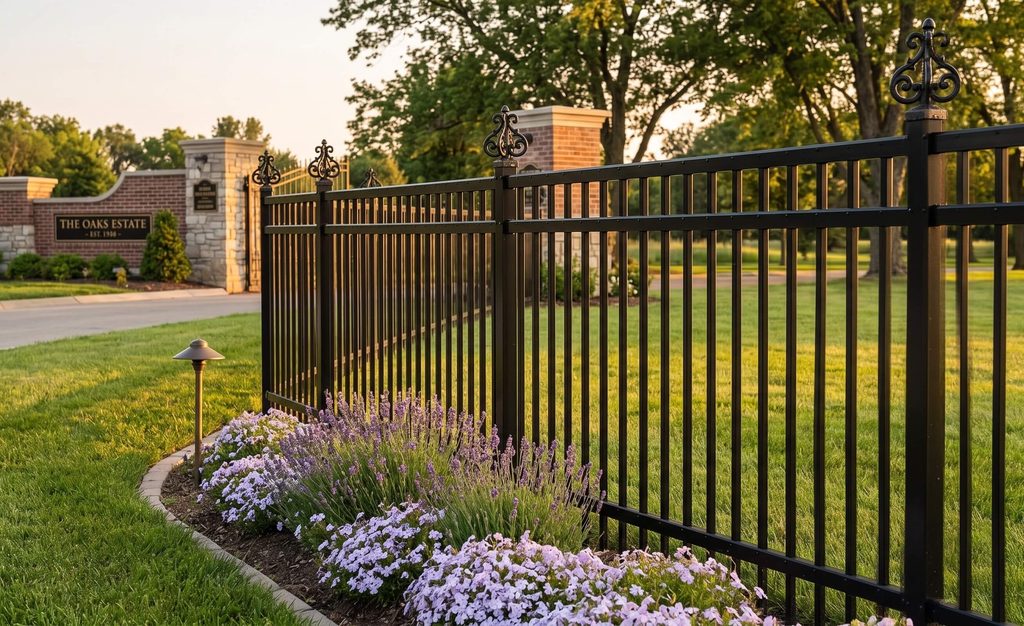
Your entrance looks planned. The gate uses the same material and style as the run beside it. Matching hardware finishes the look.
Fences Your Gate Connects To
What the Job Covers From Start to Finish
Opening with you. We walk the opening with you and set where the gate swings.
Gate posts. Gate posts are set deeper and wider than line posts.
Frame. The gate frame is braced to stay square.
Hinges and latch. Heavy hinges go on, and the latch is aligned to meet its catch.
Check. We check that it swings freely.
Walk, Drive and Double Gates
Gates come in a few shapes. Each suits a different opening.
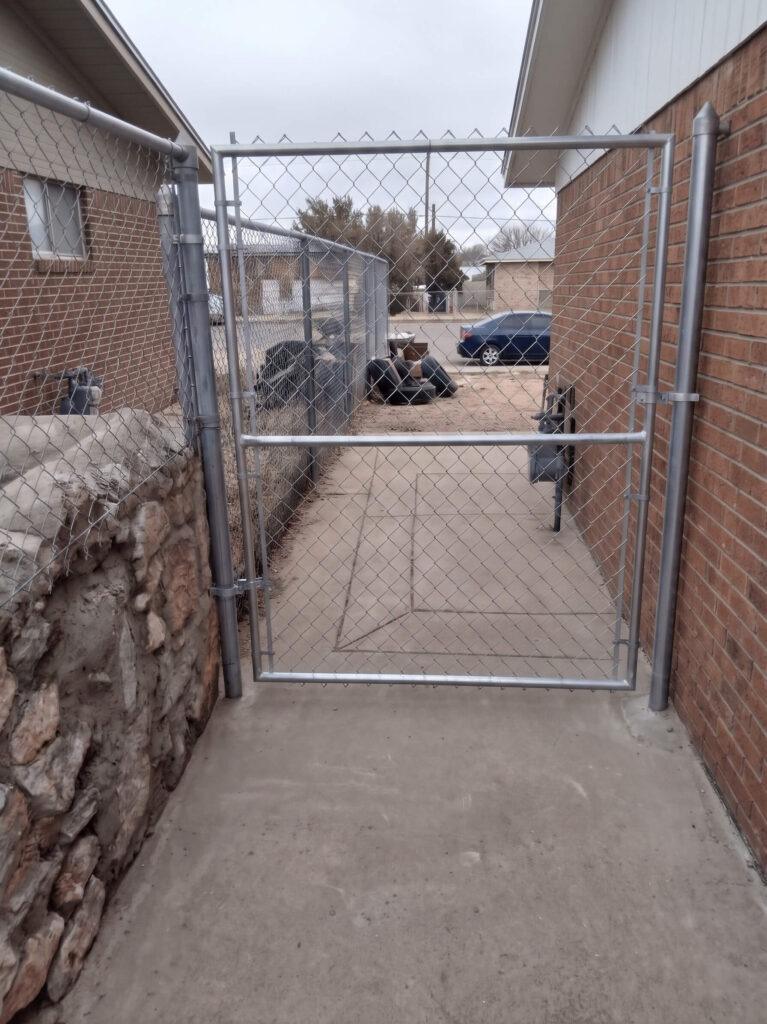
Walk gate.
A single gate for people, mowers and carts. It sits where you cross most often.
Drive gate.
A wide gate for cars, trucks and trailers. It is sized for the biggest vehicle that drives through.
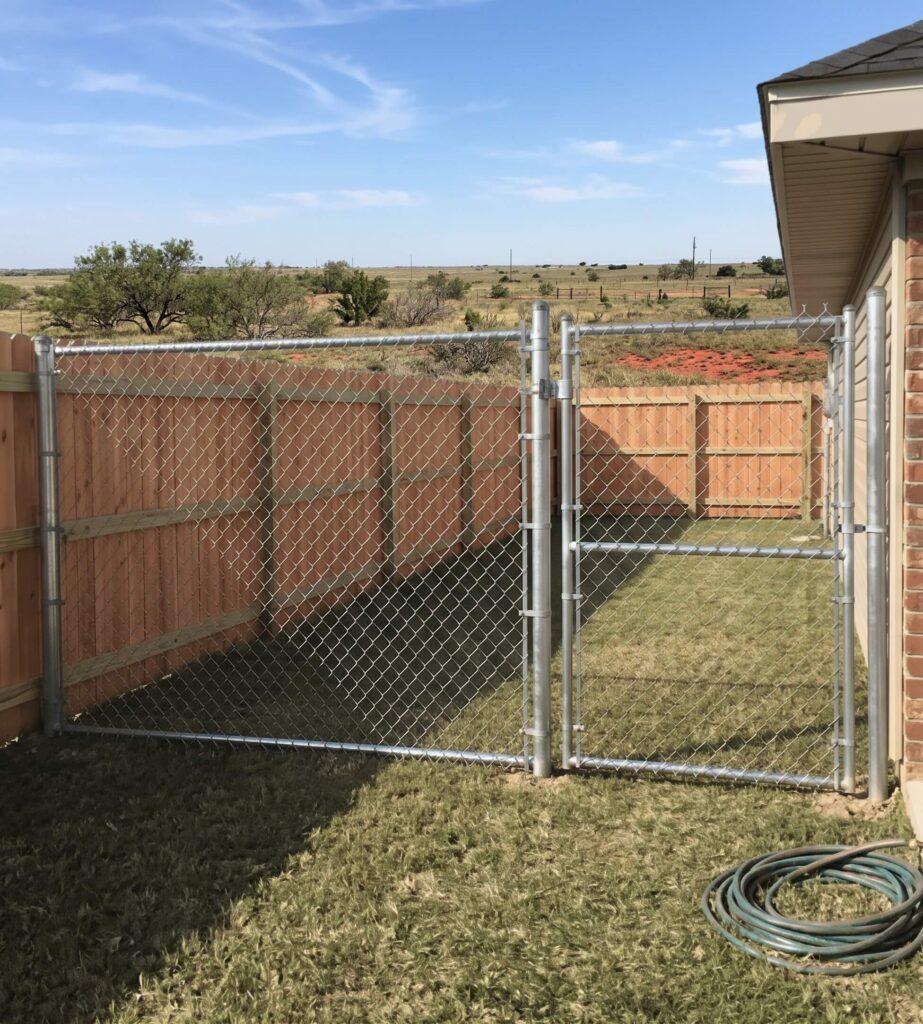
Double gate.
Two leaves that split the weight across a wide opening. Each leaf swings on its own post.
Match to the fence.
Wood, chain link, vinyl, iron and pipe each have their own gate style. We build the gate in the fence’s own material.
What Happens After You Get In Touch
Three steps, in this order. Nothing is hidden, and nothing starts until you approve the plan.
- You get in touch. Send the short form or call. We can call you back and ask a few questions first, so we know where the gate goes and what it is for. Estimates are always free.
- We visit and quote in person. We look at the opening with you and measure it. You choose the gate style, the swing and the hardware, and you see the itemized quote on site.
- We hang it, you approve. We set the gate posts, hang the gate and align the latch. We check that it swings freely and tidy the work area when we finish.
Soil, Weight and the Gate Post
A gate hangs its whole weight from one post, and the swing adds a pull on every use. Clay-rich ground holds moisture around a post, and a post that shifts lets the gate drop at the latch end. That is where a sagging gate starts.
We dig gate posts deeper and wider than the posts beside them, and we set them in concrete. We brace the frame so it stays square, and we hang it on heavy hinges. You get a gate that keeps closing the way it did when it went on.
Automatic Gates: Open From Your Car
An automatic gate puts you in control of your entrance. You press a button and drive in, without stepping out to unlatch a gate. It suits a busy driveway, a business entrance or a long rural drive.
Entry without leaving the car.
You open the gate from the driver’s seat, in rain or heat. Your arrival takes seconds.
A closed entrance by default.
The gate shuts behind you, so your property is closed without anyone remembering to latch it.
Control over who comes in.
Keypads and remotes let you give access to family, staff or deliveries and keep everyone else out.
A finished look at the entrance.
A well-built gate frames the driveway and makes the property feel complete.
Swing or Slide
The first choice for a powered gate is how it moves. Your drive and the space around it decide most of it.
Swing gates.
They open on hinges, like a large door. They suit flat drives with room for the arc, and they cost less to build.
Slide gates.
They roll along the fence line on a track or wheels. They suit tight drives, slopes and spots with no room to swing.
Single or double leaf.
A single gate suits a narrow drive. A double gate splits the weight and suits a wide opening.
Entry options.
Keypad, remote, intercom or a mix. We match the control to who uses the gate.
Power at Your Entrance
An automatic gate runs on electricity, so a power line has to reach the operator from the house, a pole or a panel, usually through a trench. Utilities get located before we dig it.
Texas811 marks public lines for free, and the request goes in at least two working days before digging. Private lines on your property, such as a water line, a septic line or an old power run, can carry locating fees. We plan the route with the locate in hand, so the trench avoids what is buried.
Hinges, Posts and Latches That Hold the Alignment
Every part of a gate moves, so every part gets picked for the load.
Posts.
They take the weight and the pull of every swing. We size them to the width and the material.
Frame.
A braced frame stays square, so the gate does not twist. A diagonal brace carries the load.
Hinges.
Heavy hinges with room for the gate to clear the ground and the fence.
Latch.
It meets its catch at the right height. We choose a style that works with one hand, or one that takes a lock.
Stops.
A stop or drop rod holds the gate at its seat.
Operator.
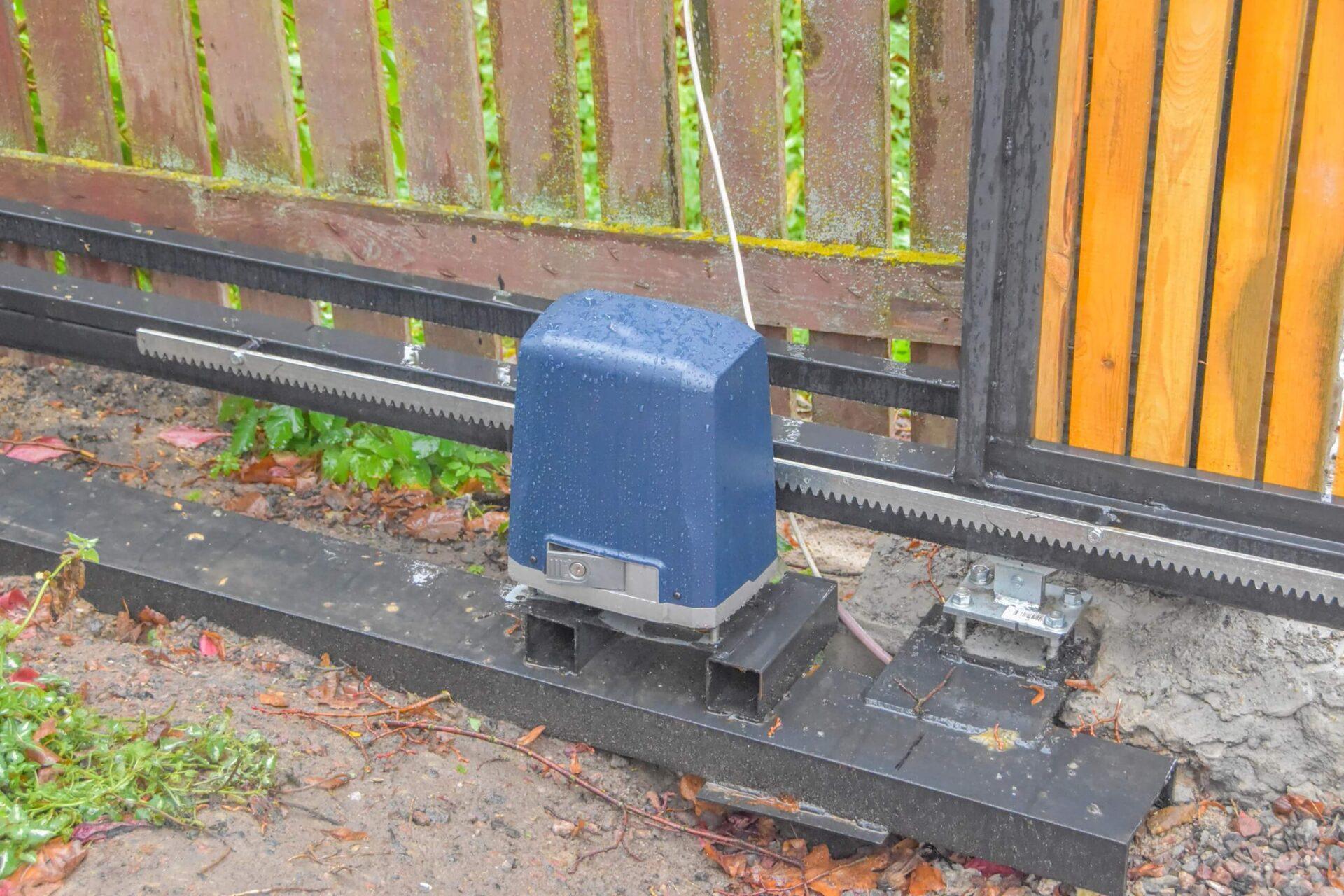
The motor and arm or drive that moves an automatic gate. We choose one sized to the gate weight and the use.
Safety sensors.
They detect something in the path and stop the gate. We set and test them.
Controls.
Keypad, remote or both. We program them and show you how to add or remove users.
Manual release.
It lets you open an automatic gate by hand if the power goes out.
Where a Gate Can Swing in Abilene
Planning & Development Services handles gate placement. Code Compliance handles gate condition.
On your side of the line.
A fence must stand on private land, clear of the public right-of-way and at least 10 feet back from the curb or pavement edge. A gate in that line swings on your land too.
A gate that matches the fence.
A gate follows the fence it sits in: 7 feet on the sides and rear, and 2½ feet solid or 4 feet open at the front line.
Paperwork that stays small.
A building permit and a variance come into play above 7 feet.
A gate that stays in shape.
Under the city’s nuisance rules, a fence with broken, loose or missing parts counts as deteriorated. A gate on loose hinges can fall in that group.
Lines marked before the first hole.
Texas811 needs two working days of notice, with holidays left out, and marks public lines free.
Your lot decides the rules.
Beyond the city limits, your town or county decides. We begin with where the gate sits.
Keeping a Gate Swinging
You can keep your gate swinging true with a few minutes of care each season. Each check protects the hinges, the latch and the post.
Lubricate twice a year.
Oil on each hinge pin keeps the gate quiet.
Check the latch.
If it misses its catch, the post has moved or the frame has dropped.
Lift, do not drag.
A gate that rubs the ground needs an adjustment before the post shifts.
Tighten hardware.
Bolts loosen with use. A turn of a wrench keeps the gate square.
Keep the swing path clear.
Weeds, gravel and loose stones in the arc scrape the gate or stop it.
Test the sensors.
On an automatic gate, put an object in the path once a month and check that the gate stops.
Replace remote batteries.
A weak battery is the most common reason a gate does not respond.
Know the manual release.
Make sure you know how to open the gate by hand when the power fails.
Gate Installation in Abilene and the Towns Around It
You get the same visit whether your gate is in Abilene or out toward Tye, Merkel, Buffalo Gap, Hawley or Clyde. Tell us where the gate sits, and we start with the rules for that address.
What Sets the Price of a Gate
Width and height set the first part of the price. Material comes next, followed by single or double leaf, the latch and any lock. An automatic gate adds the operator, the controls and the distance to power. Then the site: slope, hard ground, the shape of the posts beside the opening and any old gate that must come out.
Estimates are always free. Quoting in person is the preferred way, because the measurements, the ground and the gate openings are all visible on site.
The visit is free. Have three things ready: the width you need, what passes through and which way the gate should swing.
Gate Fence or Automatic Gate
| What matters | Manual gate | Automatic gate |
|---|---|---|
| Opening | By hand | Keypad, remote or intercom |
| Power | None | Needs power run to the gate |
| Upkeep | Hinges and latch | Hinges, latch, operator and sensors |
| Cost | Lower | Higher |
| Best for | Yards, walk-through access, light traffic | Busy drives, long entrances, businesses |
Choose a manual gate when you pass through a few times a day. Choose an automatic gate for a busy drive. The sections above cover the operator, the sensors and the controls.
You Go First After the Gate Is Hung
You sign off on the width, the swing and the latch before any digging. After that, the install is on us.
After we build your fence, any fix goes to the front of the schedule. You’re booked first. If the problem is the installation, we fix it.
FAQs
How wide should my gate be?
Wide enough for the biggest thing that goes through. Give us the widest mower, trailer or truck and we size the gate to it.
Can you add a gate to an existing fence?
Yes. We cut the opening, set new gate posts and hang a gate in the fence’s own material.
Why does my gate sag?
The gate post usually shifted or the frame lost its square. A deeper post and a braced frame fix it.
Do I need a permit for a gate?
Only above 7 feet, when a permit and a variance apply. We go over your gate at the estimate.
Swing or slide, which is better?
Swing gates cost less and suit flat drives with room for the arc. Slide gates suit slopes and tight spaces.
What happens to an automatic gate when the power goes out?
The manual release lets you open the gate by hand.
Are automatic gates safe?
Safety sensors stop the gate when something is in its path. We test them before we leave.
Can I use a keypad and a remote?
Yes. Most systems take both, and we program them at install.
Who calls before digging?
We do. Texas811 wants two working days of notice, and marking public lines is free.
Do you build outside the Abilene city limits?
Yes. We build across Taylor County. The location of your property decides which rules apply, and we check them before the build.
Do you charge for estimates?
No. Estimates are always free, and quoting in person is preferred.
Show Us the Opening
Meet us at the opening and show us what goes through it. We measure the width, read the ground and go over style and latch. The estimate costs nothing, and you leave with a plan.