Temporary Fence and Construction Panels in Abilene, TX (Who Actually Call You Back)
A clear work zone, with linked panels from corner to corner.
✔ Free on-site estimates
✔ On-site from start to finish
✔ Priority warranty scheduling
Open Monday to Saturday, 7am-7pm
Get Your Free Fence Estimate
Temporary Fence and Construction Panels in Abilene
Temporary fence and construction panels close off your site now and come down when the work is done. They keep people out of a work zone, hold a crowd to its route and guard materials and equipment. You get a firm edge without a permanent build.
At Everock Fencing in Abilene, TX, we set temporary fence for job sites, events and vacant lots across Taylor County, including Lawn and Trent. You tell us how long it stays, and we plan the panels, the gates and the bracing to match.
Why Temporary Panels Shift
A temporary fence marks your zone for as long as the job runs. Panels that are not linked and braced slide, lean in wind and leave gaps.
We link every panel and anchor the run, so the zone stays closed until the work ends.
Why Put Up a Temporary Fence
A clear edge from the first day.
Show everyone where the work zone starts. Linked panels give your site a straight, visible boundary, and each panel locks to the next to hold the line.
Up without digging.
Your ground stays as it was when the fence comes down. Panels on weighted feet stand on pavement, gravel or bare dirt with no holes. Nothing gets dug or poured.
Control over the crowd.
Guests go where you want them to go. At an event, the fence sets the entries and the routes. Gates sit where your plan puts them.
A layout you can change.
You fence the area you need and nothing more. Panels lift out and move when the plan shifts. The same panels link back up in a new layout.
Services That Go With a Temporary Fence
Construction Panels for Your Job Site
Construction panels give a job site a firm edge from the first day. They keep people out of the work zone and keep your materials and equipment inside it. The same panels link up again when the site changes.
Around a new build. Panels mark the footprint and the access route, so trucks and crews know where to go.
Around a remodel or teardown. The fence holds the area clear while the work runs. Walk gates keep the crew moving in and out.
Around materials and equipment. A closed line protects the stacks and machines you leave on site overnight.
Around a home project. A pool dig, a driveway pour or a big landscaping job gets a clear boundary that keeps kids and pets out.
You tell us the footprint, the entrances and how long the job runs. We lay out the panels, the gates and the bracing to match.
What Happens After You Get In Touch
Three steps, in this order. Nothing is hidden, and nothing starts until you approve the plan.
- You get in touch. Send the short form or call. We can call you back and ask a few questions first, so we know what you need to fence off and where. Estimates are always free.
- We visit and quote in person. We walk the site with you, measure the run and mark the gate spots. You choose the panel height and how the fence is anchored, and you see the itemized quote on site.
- We build, you approve. We set the panels and anchors where you marked them. Then we check that the gates open and the run holds, and we tidy the work area when we finish.
Panels and the Big Country Wind
Wind crosses the Big Country with nothing to slow it. A free-standing panel acts like a sail, and a screen turns it into a bigger one. Open mesh passes more air than a screen does.
We counter the wind with weighted feet, braces at the corners and clamps on every joint. Where a screen goes up, we add bracing along the run. You get a line that stays where you set it.
What the Job Covers From Start to Finish
Layout with you. The panels and anchors go where you marked them.
Panels and anchors. Chain link panels sit on weighted feet or driven posts.
Braces and clamps. Braces and clamps go on at every joint and corner.
Gates. Walk and drive gates are sized for crews and trucks.
Check. We check that the gates open and the run holds.
Panel, Post and Screen Options
A temporary fence is a short list of choices. Each one changes how the line behaves on your ground.
Free-standing panels.
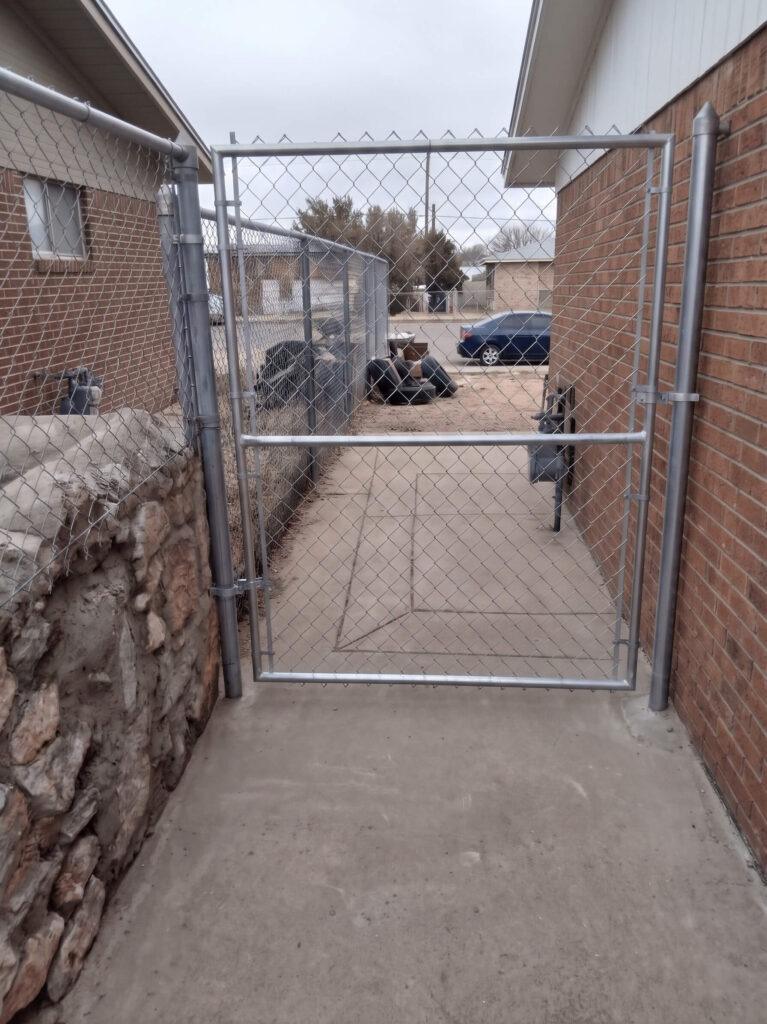
Chain link panels lock together and stand on counterweighted feet. They sit on pavement, gravel or bare dirt without digging.
Driven posts.
Longer runs or soft ground call for posts in the ground with mesh stretched between them. The hold is firmer.
Screens.
A privacy screen hides the site from the street. It also catches wind, so it gets extra bracing.
Gates.
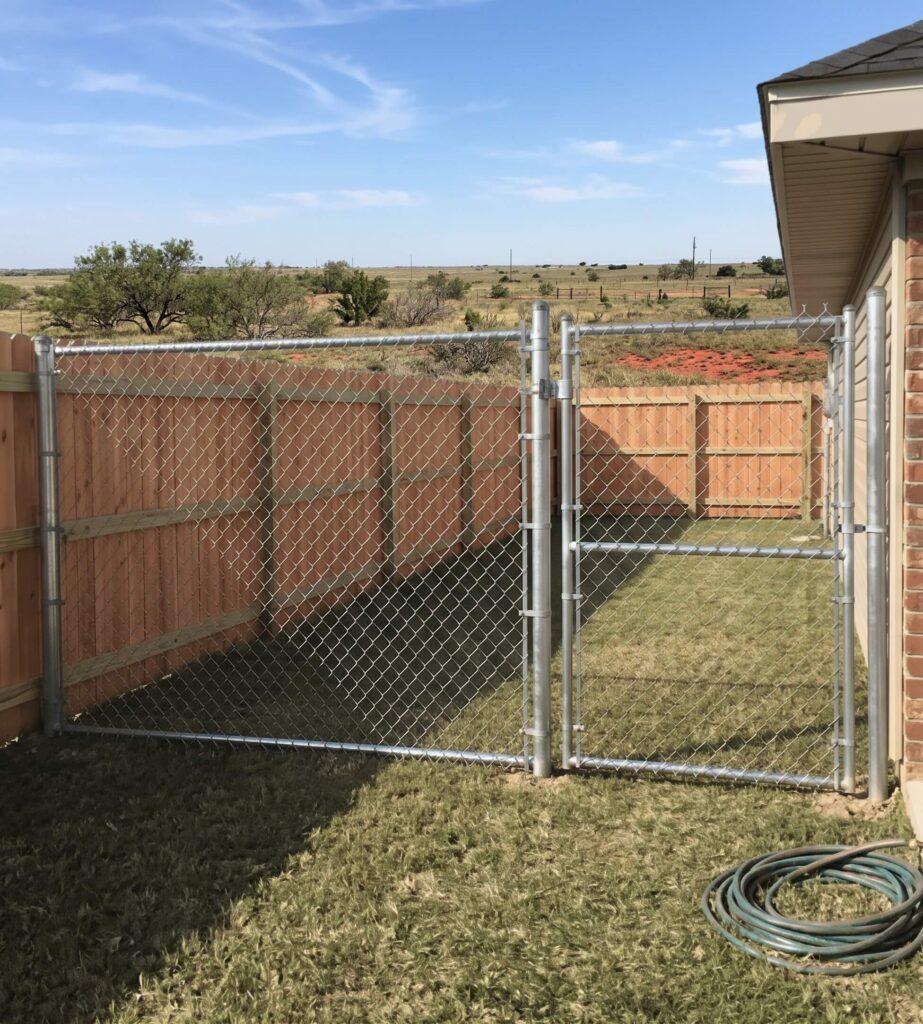
Walk gates and drive gates sit in panel frames. We size them for the biggest load that passes through.
Most sites mix two of these. Panels along a short front, driven posts along a long back line and a drive gate at the entrance is a common plan.
Panels, Posts and Screens That Hold the Line
Each part has a job in a fence that is not set in concrete.
Panels.
Welded frames with chain link mesh, built to link side by side.
Feet.
Weighted bases that keep a panel upright and give the wind less to push.
Clamps.
They tie neighboring panels into one line, so a gust moves the whole run and not one piece.
Braces.
Angled supports at corners and along screen runs.
Gates.
Frames with hinges and a latch that lines up. We set each one to swing clear of the ground.
Rules to Check Before Panels Go Up
Planning & Development Services answers placement questions for a site. Panels along a street can fall under different rules than a home fence, so we plan the layout around the answer for your lot.
Digging planned around the locate.
Panels on feet need no holes. Posts or anchors that break ground wait for the Texas811 locate: two working days of notice, holidays not counted, and public lines marked at no charge.
Private lines planned for.
Lines on your own property can carry locating fees. We plan around them once they are marked.
Your site decides the rules.
Past the city limits, your town or county sets the rules. Each layout starts with where your site sits.
Keeping a Temporary Line Tight
You can keep a temporary line tight with a quick look after wind. Each check takes a minute and keeps the panels where we set them.
Check clamps after a windy day.
A loose clamp is the first thing to find.
Reset the feet.
If a panel has shifted, pull it back to the line.
Keep gates latched.
An open gate takes the wind like a sail.
Clear loose material from the base.
Trash and debris against the mesh add weight and wind load.
Call about any lean.
A leaning panel gets fixed before the next gust.
Temporary Fence Installation in Abilene and the Towns Around It
You get the same visit whether your lot is in Abilene or out toward Tye, Merkel, Buffalo Gap, Hawley or Clyde. Tell us where the lot sits, and we start with the rules for that address.
What Moves the Price of Temporary Fence
Length and height set the largest part of the price. How long the fence stays comes next, along with the choice between panels and driven posts. Screens, bracing and the number of gates add to the total. The site decides the rest: slope, hard ground, access for the truck and how many times the layout moves.
Estimates are always free. Quoting in person is the preferred way, because the measurements, the ground and the gate openings are all visible on site.
The visit costs you nothing. Have three things ready: how long the fence must stay up, the run length and where it has to be anchored.
The site visit is free. Bring three things: the length you need, how long the fence stays and where the entrances go.
Temporary Fence, Permanent Chain Link or Wood
| What matters | Temporary fence | Permanent chain link | Wood |
|---|---|---|---|
| Time on site | Short to medium | Years | Years |
| Setup | Feet or driven posts | Posts in concrete | Posts in concrete |
| Wind | Needs bracing and weight | Holds with deep posts | Solid boards catch wind |
| Moving it | Panels lift out | Fixed in place | Fixed in place |
| View | Open mesh, screen optional | Open mesh | Closed |
| Best for | Job sites, events, lots | Yards, acreage, lots | Privacy at a home |
Choose temporary fence when the need has an end date. Choose a permanent fence when the need stays. See the chain link fence installation page for a fence that stays.
You Go First After Setup
You approve the layout, the gate spots and the screen choice before we set a panel. From there, the setup is ours to get right.
After we build your fence, any fix goes to the front of the schedule. You’re booked first. If the problem is the installation, we fix it.
FAQs
Do you fence construction sites?
Yes. Construction panels go around new builds, remodels, teardowns and material yards. You tell us the footprint and the gate spots, and we lay out the line.
How long can a temporary fence stay up?
As long as your job needs. Tell us the timeframe and we choose the bracing for it.
Can it hold up in wind?
Yes, when it is braced. Weighted feet, clamps and corner braces keep the line in place, and screens get extra bracing.
Can it have gates?
Yes. Walk gates and drive gates fit into the panel line, sized for crews and trucks.
Do I need a permit for a temporary fence?
It depends on the site and how it faces the street. Planning & Development Services answers that for your lot, and we work from its answer.
Who calls before digging?
We do. Texas811 wants two working days of notice, and marking public lines is free. Panels on feet need no digging.
Do you build outside the Abilene city limits?
Yes. We build across Taylor County. The location of your site decides which rules apply, and we check them before the setup.
Do you charge for estimates?
No. Estimates are always free, and quoting in person is preferred.
Walk the Site and Mark the Line
Walk your site with us and mark where the line runs. We measure the runs, place the gates and talk through panels, posts and bracing. The estimate costs nothing, and you leave with a clear plan.
Other Fences We Build
Fence Types