Agricultural Fence Company in Abilene, TX (Who Actually Call You Back)
Stock stay inside, with braced corners that take the pull of the run.
✔ Free on-site estimates
✔ On-site from start to finish
✔ Priority warranty scheduling
Open Monday to Saturday, 7am-7pm
Get Your Free Fence Estimate
Agricultural fencing keeps your animals where they belong and your boundary clear. It protects the herd, the crop and the neighbor’s land in one line. A well-built field fence saves you from chasing livestock down the road and from patching the same weak spot every spring.
At Everock Fencing in Abilene, TX, we build agricultural fence for land across Taylor County, from Potosi to Buffalo Gap. You tell us what the fence has to hold, and we build the line, the corners and the gates to do it.
Why Field Fences Lose Their Hold
Stock push on the weakest section every day. Corners take the pull of the whole run, and gates take the traffic.
We brace the corners and hang wide gates on deep posts, so the run holds from corner to corner.
What a Well-Built Field Fence Gives You
Animals that stay put.
Spend your time on the work, not on loose stock. Tight wire and strong corners hold cattle, sheep and goats inside, and braced corners take the pull of the wire.
A boundary that stays clear.
Disputes over the line become rare. A straight, tight line shows exactly where your land ends. We walk the fence line with you before work begins.
Gates your equipment fits through.
Your day does not stop at the gate. You set the widths, so trucks, trailers and tractors cross without a squeeze. Gate posts are set deeper to carry the swing.
Less repair over the years.
You mend a spot now and then instead of rebuilding a run. Braced corners and deep posts keep the fence tight. Tight wire spreads the load along the line.
Pick a Fence Type for Your Land
What the Job Covers From Start to Finish
Layout with you. We walk your land, measure each run and mark the gate spots before any hole is dug.
Lines marked. We request the Texas811 locate before we dig. That call does not mark private lines on your land, so you point those out on the visit.
Posts and braced corners. Posts go in, and corner and end assemblies are braced to hold the tension.
Fencing. Woven wire, pipe or cable lines are chosen for your animals and stretched tight.
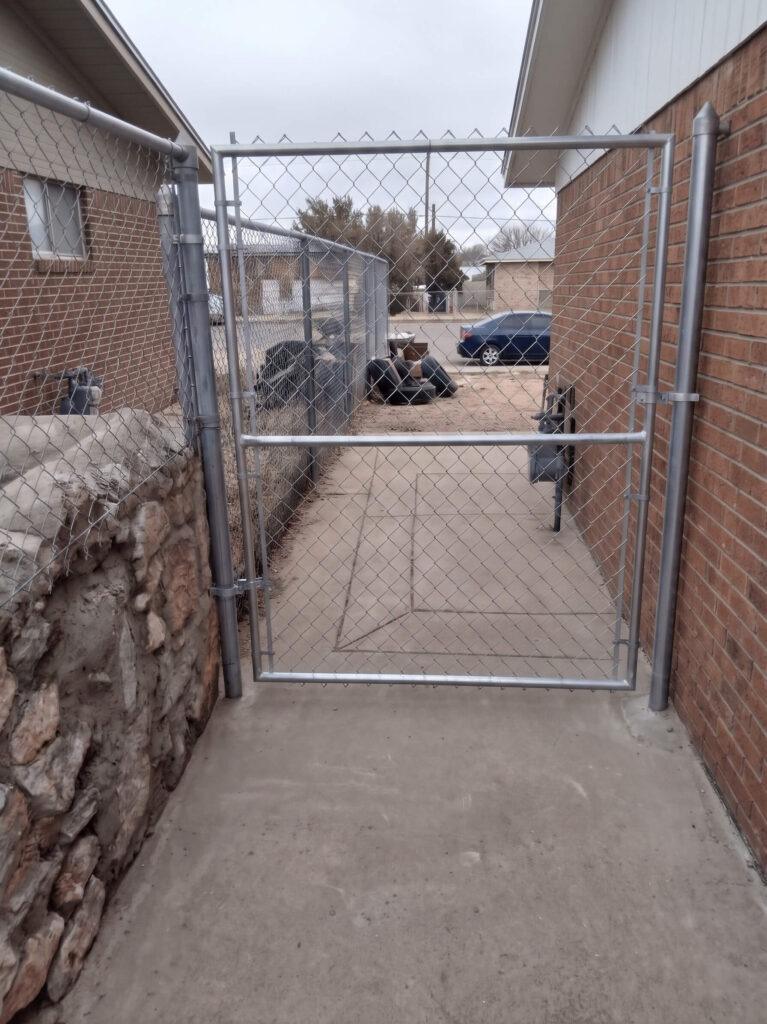
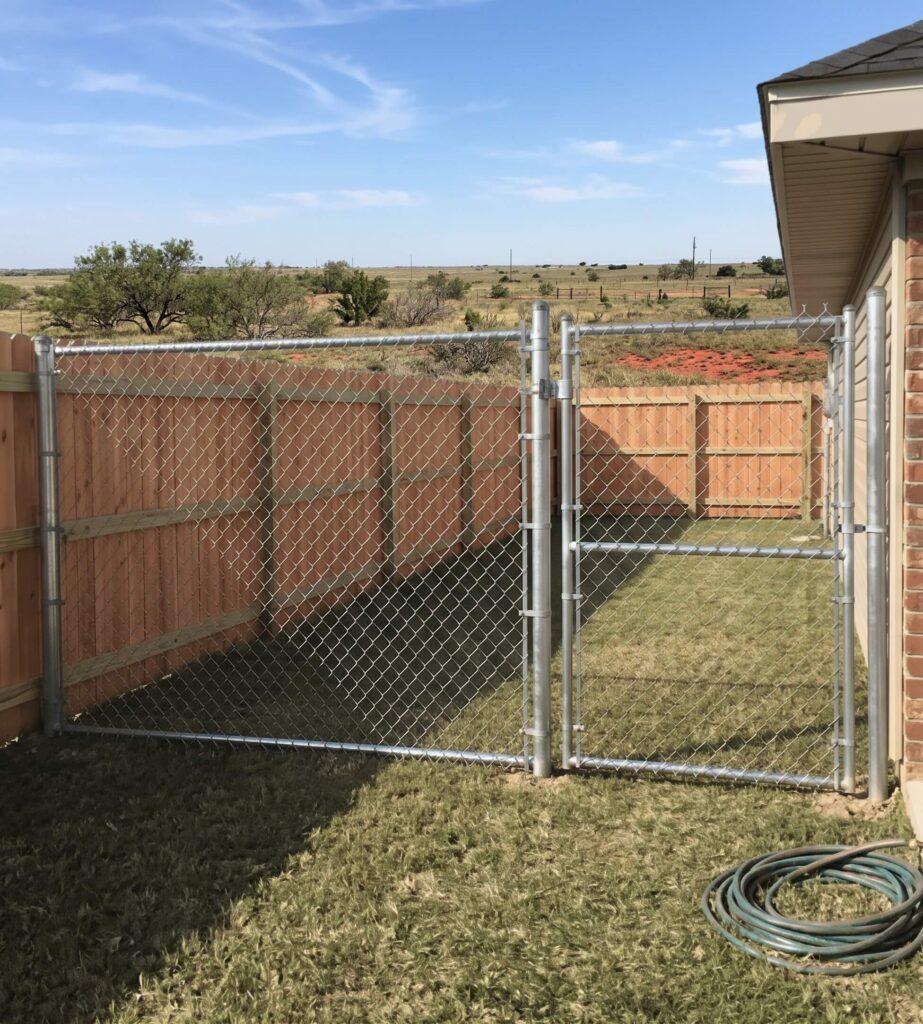
Gates. Field gates sized for equipment hang on heavy posts.
Fence Types for Working Land
Working land needs a fence matched to the animal. Each type below holds a different kind of stock and fits a different budget of time and upkeep.
Woven wire.
A mesh of horizontal and vertical wires that holds sheep, goats and calves. It keeps small animals from slipping through.
Pipe.
Welded steel rails for pens, corrals and entrances. It takes a leaning animal without bending.
Cable.
A taut line of cable on strong posts for long open runs. It suits large areas where the animals respect the line.
High tensile and electric.
Wire kept under tension, with or without a charge, for cost-efficient field lines.
Many properties use more than one. Pipe at the pens and the entrance, woven wire along the fields and cable across open ground makes a practical mix. We plan the transitions so each type meets the next with a strong post.
Taylor County Land, Livestock and Soil
Ranching has shaped Taylor County since the 1880s. The Texas State Historical Association records that livestock, mostly cattle, sheep, angora goats and hogs, produced most of the county’s farm income, and fences have been a daily part of that work. A fence here has to hold animals of several sizes, so the wire, the spacing and the posts all matter.
The ground matters too. USDA describes the Abilene soil series as clay loam, with 35 to 50 percent clay, that water moves through slowly. Clay holds moisture around a footing, so a post needs real depth and a solid base to stay straight. We set corner and end posts deeper than the line posts between them, because they carry the pull of the wire.
What Happens After You Get In Touch
Three steps, in this order. Nothing is hidden, and nothing starts until you approve the plan.
- You get in touch. Send the short form or call. We can call you back and ask a few questions first, so we know what you want to fence in and where. Estimates are always free.
- We visit and quote in person. We walk your land with you, measure each run and mark the gate spots. You choose the fence type, the height and the gate width, and you see the itemized quote on site.
- We build, you approve. We request the Texas811 locate and set the posts and braced corners. Then we stretch the fencing tight, hang the field gates and tidy the work area when we finish.
Posts, Wire and Gates That Hold Your Stock
A field fence is a system, and one weak part sets the strength of the whole. We pick each part for the animal and the ground.
Corner and end posts.
They take the full pull of the wire. We set them deep, brace them and anchor them to the line.
Line posts.
They hold the wire up between the corners. We space them to the animal and the type of wire.
Wire and cable.
We choose the type and gauge for the stock, then stretch it evenly so no section sags.
Gates.
Gates take the most use. We hang them on heavy hinges, on posts built for the weight, with latches that animals cannot work loose.
Fasteners.
We secure the wire with clips or staples suited to the post, so nothing slips under load.
Where Rules Apply to Agricultural Fence
Abilene’s fence rules cover residential areas inside the city, and farm or ranch land outside the city follows different rules. Your location decides which ones apply, so we confirm where your land sits first.
Inside the city limits.
The fence stays 10 feet or more from the curb or pavement edge and off the public right-of-way. Over 7 feet, a permit and a variance are required.
Your land decides the rules.
The rules follow your town or county, and we check them before we build.
Lines marked before the first hole.
The Texas811 request goes in two working days ahead of the first post hole, and marking public lines is free. Private lines on the property may carry locating fees.
A line you can point to.
On rural land, we build to the line you confirm, with corners marked or surveyed.
Care for a Field Fence
Walk the line after storms.
Check for downed wire, a leaning post or a tree across a section.
Retighten as needed.
Wire loosens over time. A quick tension fix keeps the line firm.
Keep gates working.
Oil the hinges and make sure the latch catches on its own.
Clear brush at the base.
Weeds and vines add weight and hide damage.
Fix small breaks fast.
Animals test a weak spot repeatedly. A repair on day one is easy.
Field Fence Installation in Abilene and the Towns Around It
You get the same visit whether your land is in Abilene or out toward Tye, Merkel, Buffalo Gap, Hawley or Clyde. Tell us where the land sits, and we start with the rules for that address.
What Shapes the Price of a Field Fence
Total length sets the first part of the price. The type of fence comes next, since pipe costs more than wire. The number of corners and gates add to the total because each takes extra posts and bracing. The ground decides the rest: rock or hard digging, slope, brush that must be cleared and access for equipment.
Estimates are always free. Quoting in person is the preferred way, because the measurements, the ground and the gate openings are all visible on site.
Walking the fence line costs you nothing. Bring three things: your boundary marks, the animals you run and the gate widths you need.
You Go First After the Last Post
You see the route, the corners and the gate spots before we dig. From the first post on, the build is ours to get right.
After we build your fence, any fix goes to the front of the schedule. You’re booked first. If the problem is the installation, we fix it.
FAQs
What fence holds goats and sheep?
Woven wire with tight spacing holds small animals. Pipe or cable alone leaves gaps they can slip through.
How deep do the corner posts go?
Corner and end posts go deeper than line posts, and we brace them against the pull of the wire.
Can the gates fit my equipment?
Yes. Tell us the widest and tallest piece of equipment that crosses, and we size the gate around it.
Do I need a permit for a farm or ranch fence?
Inside Abilene, only a fence over 7 feet needs a permit, and that height also needs a variance. Outside the city, your location sets the rules.
Who calls before digging?
We do. Texas811 wants two working days of notice, and marking public lines is free.
Do you build outside the Abilene city limits?
Yes. We build across Taylor County. The location of your land decides which rules apply, and we check them before the build.
Do you charge for estimates?
No. Estimates are always free, and quoting in person is preferred.
Walk the Fence Line With Us
Walk your fence line with us and show us what it has to hold. We measure the runs, mark the corners and gates and talk wire, pipe and posts. The estimate is free, and you leave with a plan for the land.